Category: Uncategorized

Species Please!

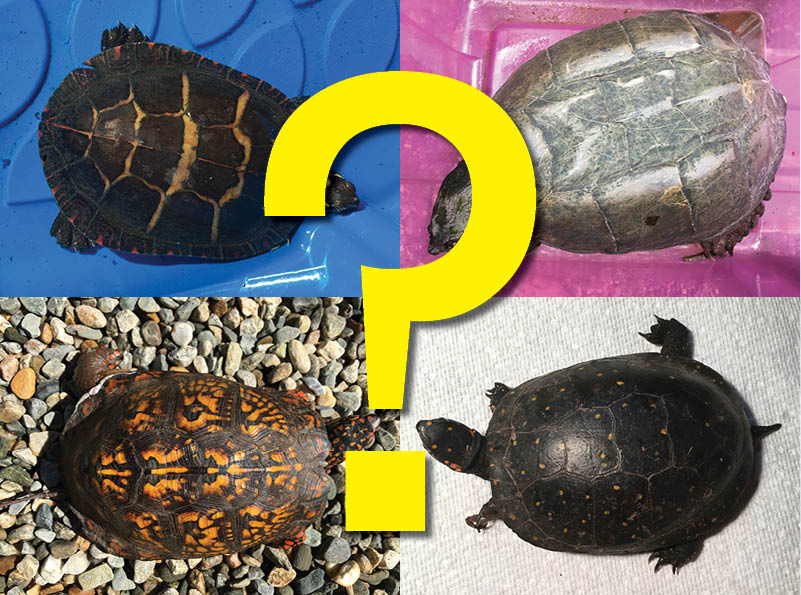
Found an injured turtle? The first question to answer is: what kind? One of the most surprising aspects of turtle rehab is the constant realization that most people have no idea how to tell one kind of turtle from another. Yet this is a critical piece of information in being able to determine what happens next.

Think of it this way. No one calls a rehabilitator and says “I found an injured rodent.” They say I found a squirrel, or a woodchuck, or a chipmunk or a mouse. Most people are able to identify these species, and that makes the job of helping these animals—and their finders—much easier, because the rehabber can assess the situation immediately and plan accordingly. Think about it: the ramifications of taking in an injured chipmunk are considerably different than they are for an injured beaver or porcupine. One is small and common and won’t require much in the way of resources, one is large and aquatic, and one is large and potentially dangerous. Their diets, habitat needs and behaviors are completely different, and that means their treatment plans need to be completely different. Before even deciding whether to accept that animal, a rehabber must assess his or her level of skill, experience with that specific species, and capacity in terms of space, supplies and infrastructure to adequately handle that animal for as long as it will take for it to recover. And that assessment begins the minute they pick up the phone to respond to a call.

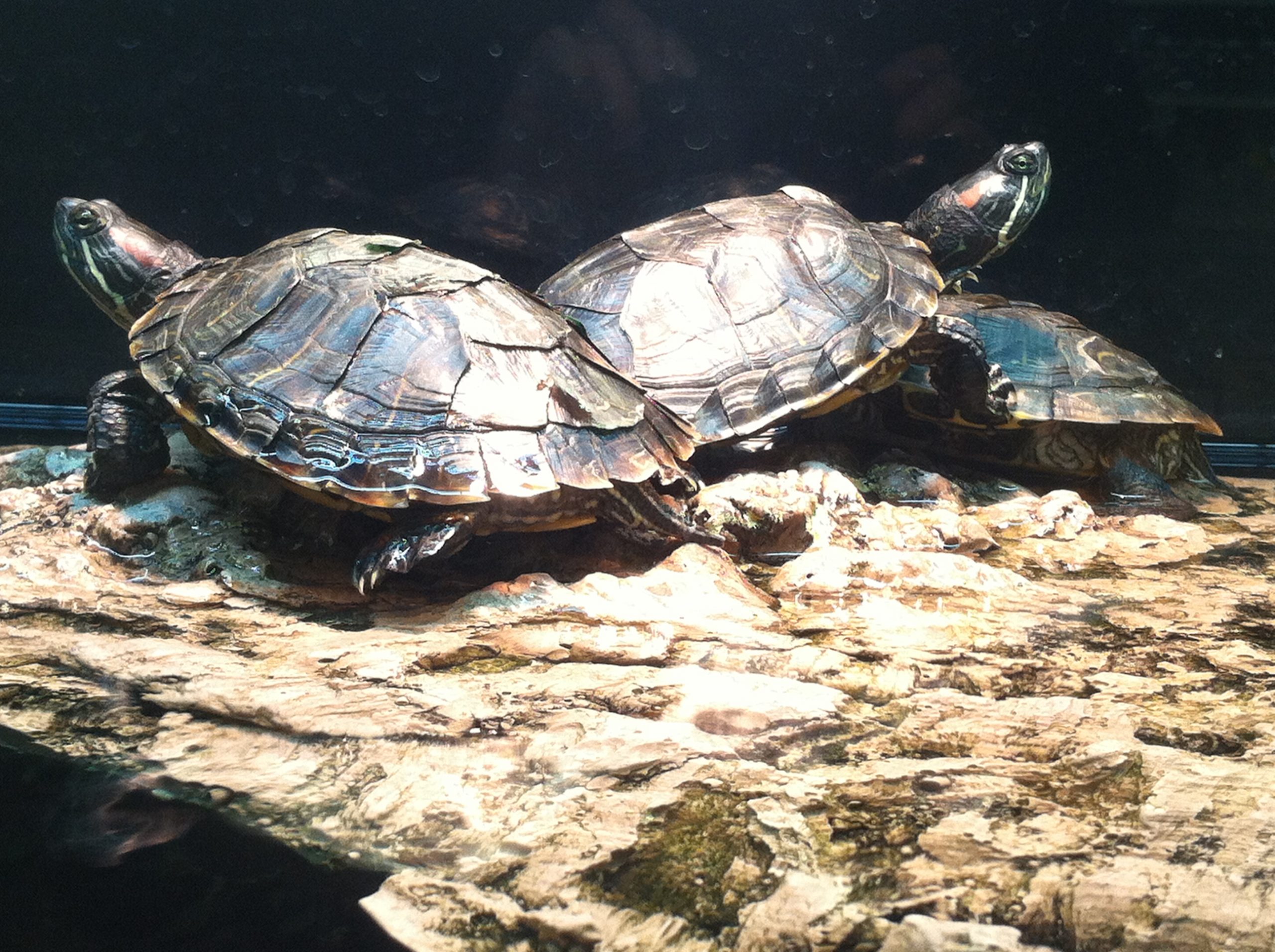
Turtles are no different. Just as saying “I found a bird” means little until you know whether it’s an eagle or a sparrow, calling about a turtle requires more information up front. The differences between even the two most commonly found species, snapping turtles and painted turtles, are vast. One may be huge, the other is small. One is able to recover from injuries the other cannot. One can be dangerous to handle, the other not (although painteds can be more aggressive than snappers!). One carries 7-9 eggs, the other 20-40. If the animal is one of the five other listed species of turtle we have in Connecticut, the stakes are higher and the animal often more specialized in its needs; does the rehabber have the knowledge, qualifications and experience necessary to handle the rarer specimen? On the flip side, the turtle could be a non-native, problem species like a red-eared slider—an animal that should be permanently removed from the wild if found and not allowed to reproduce. This introduces a whole new set of considerations, such as whether to accept that turtle for treatment at all, try to rehome or euthanize. Egg incubation is definitely a moot point, but without first knowing that the victim is a slider, real time may be spent discussing how to save those eggs.

Time is the most precious commodity of both wildlife in crisis and their rehabilitators during the busy season. Taking a moment to identify your turtle before you call is one of the best ways you can help conserve that resource. It’s a short list—only eight!—and it will be a huge help to all involved. For a quick reference, check out our Species ID page.
Every. Single. Animal. (Endangered Species Day 2020)

I am often asked why I chose to rehabilitate turtles. The answer is simple: they need the help. Sure, I have always loved these animals, but most crucially, with five out of eight Connecticut species listed as endangered to some degree, this is where the ability to save a life makes a huge difference.

Yes, one life. Earning a place on the list of Special Concern, Threatened, and Endangered Species isn’t just a matter of sheer decline in numbers; it has just as much to do with the viability of populations within a given species. There may still be a significant overall quantity of box turtles, for instance, but if they are scattered across many tiny, fragmented groups, each with few breeding adults and no opportunity to recruit new members, the loss of even one turtle can spell the end of its entire community.

That’s why it’s so important to know which species of turtle you encounter and to report its location to the DEEP if it’s one of the five listed species (Eastern Box Turtle, Wood Turtle, Spotted Turtle, Diamondback Terrapin and Bog Turtle), to NOT euthanize without giving every injured animal a chance, and to take earnest measures to do what you can to protect every animal if you live in proximity to one of these populations. Keep a natural buffer zone—as large as you can manage—around all wetlands, and never fill them. Raise mower blades to 3 inches, sweep lawns and fields for reptiles before mowing and weed whacking (remember that juveniles are small), and mow from the center outwards to give them a chance to escape towards the edges. Never take a wild turtle home as a pet, and never move one to a “better” location—that’s as good as killing it, and it often does. Never release a pet turtle into the wild; you risk spreading disease that can wipe out a wild population. Post Turtle Crossing signs from mid-May to mid-July on roads where you know turtles cross. And get any injured animal to a rehabilitator or vet who has solid experience with that species—turtles are not one size fits all, and listed species can be especially complicated.

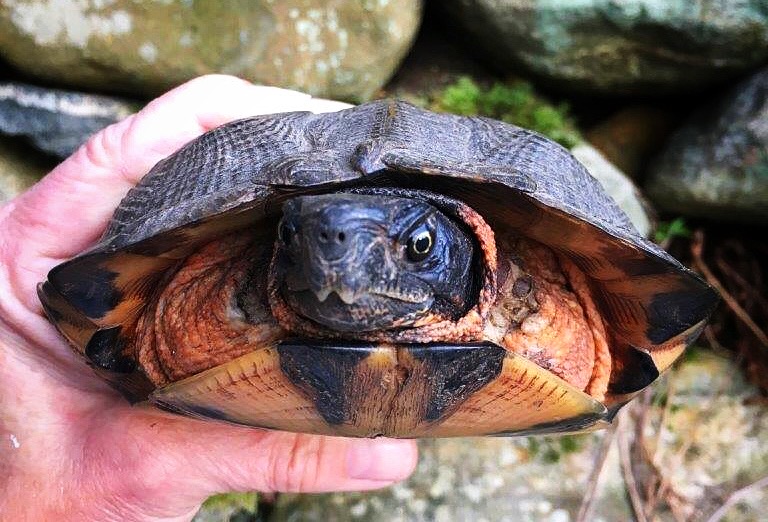
The wood turtle in this photo was found having recently lost both her front legs in a field that is mowed a few times a summer. She was able to push herself along like a skid, using her hind legs, but her prospects are not good. She could easily be drowned during mating or unable to extricate herself from underwater hibernation among the tree roots. It takes a wood turtle at least 10 years to reach maturity and be able to reproduce. If this animal was the only surviving adult female left in her population, her demise would likely mean the collapse of that population.

With human life feeling more precarious than ever, perhaps we have a new-found sense of what it means to be an endangered species. If so, let’s put some of that empathy into action and flatten the curve of extinction for these incredible beings.

May’s Miracle

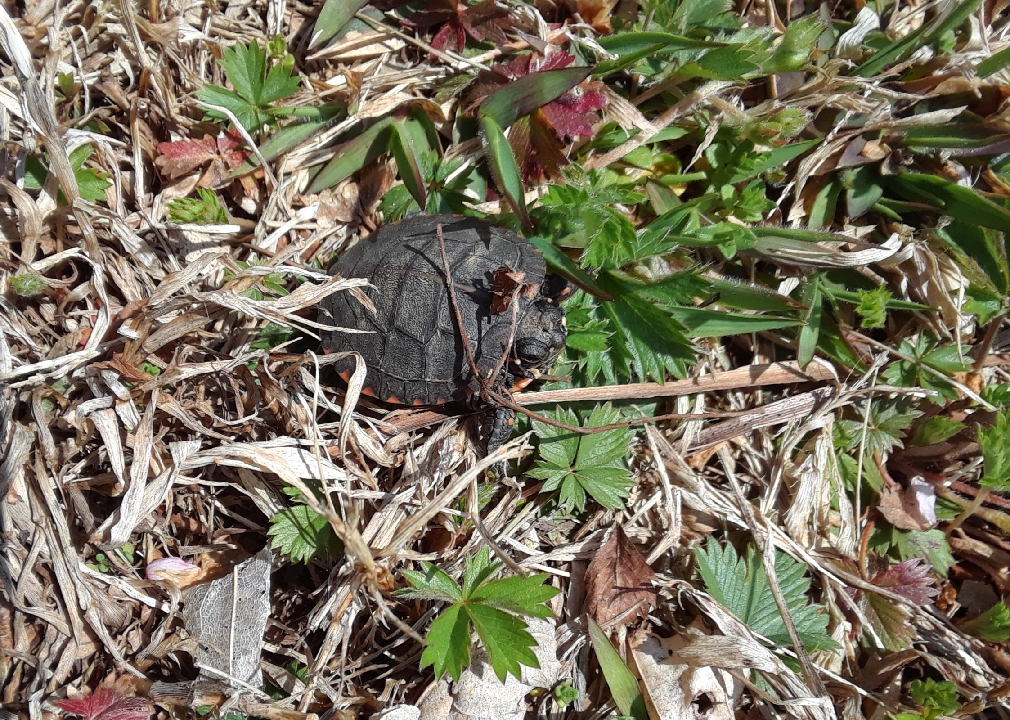
We weren’t the only ones lured out of quarantine by this past weekend’s beautiful weather. Last year’s baby painted turtles, who actually hatched late last summer but overwintered in their nests, seem to have decided to make a mass exodus on Saturday and Sunday, triggered by the warm temps and who knows what other signals they detected from deep in nature’s vaults.

It is one of nature’s mysteries, this underground survival phenomenon that occurs in painted turtle hatchlings. Do they stay snugly entrenched in the dugout their mothers created for them in order to conserve resources or to avoid predation? Possibly. But the greater mystery is how they avoid freezing. Other aquatic species hibernate deep in wetlands, where the ground never freezes. And terrestrial box turtle babies dig down below the frostline for the winter, where temps remain cozy and stable. Painteds, however, have shallow nests, so the neonatal turtles are well within the frozen zone all winter. Yet they manage not to freeze.

Painted turtles, the most common species in Connecticut and the most widespread in North America, are often taken for granted. From their incredible adaptation to northern winters as newborns or their unison emergence in spring, these creatures have a lot more going on than meets the eye. And if you’re fortunate enough to witness their entry into the world and incredible, instinctive journey to their wetlands, count yourself lucky—you’ve truly witnessed a miracle.

A Parable in Reverse

The Covid 19 Pandemic and the Problem with Pet Turtles

By now we’re all familiar with the history of the current coronavirus pandemic–how the virus originally made the jump to humans from a market peddling wildlife in China and rapidly spread through a global population with no immunity to it, having never encountered it before. What you may not realize is that humans pose the same threat to wild turtles, and their pet turtles are the vector.

History is rife with examples of “civilized” populations introducing disease to native populations that had no defense against it. Wildlife is no different. Like Europeans bringing smallpox to the Native Americans, captive turtles released into the wild can devastate entire populations of wild turtle because they may carry pathogens picked up in captivity that no wild species has ever been exposed to.

If you’ve ever encountered a non-native turtle in the wild, you probably saw what appeared to be a healthy animal, quite at home in its adopted environment. But you also saw an animal that is not supposed to be part of our Northeastern ecosystem. You saw an animal that was introduced, with no scientific testing, no regulatory approval, and certainly no permission from anyone–especially its new community. What you did not see was the impact that animal had on its new community. Sure, species like Red eared sliders, natives of the Southern U.S., adapt pretty well to life in these colder, northern parts and, for better or worse, seem to thrive here. That has made them either an invasive or a naturalized species, depending on whom you talk to or your point of view. But what pathogenic baggage do they carry with them?

The common assumption, when the questions of whether to release a captive animal arises, is that the animal has somehow forgotten how to live as a wild creature. Instincts are not given a lot of credit in popular belief. Turtles, however, have small brains and have been operating–and surviving–almost purely by their instincts for millions of years. A few months or even several years in captivity isn’t about to sever that connection. The real reason for keeping captive turtles out of the wild is that they may carry disease. Whether it’s a pet store turtle or a native animal taken illegally from the wild, any turtle that has been living OUT of the wild is a potential threat to the wild populations it infiltrates.

The Underdog

“Though she be but little,
she is fierce.”

– William Shakespeare, A Midsummer Night’s Dream

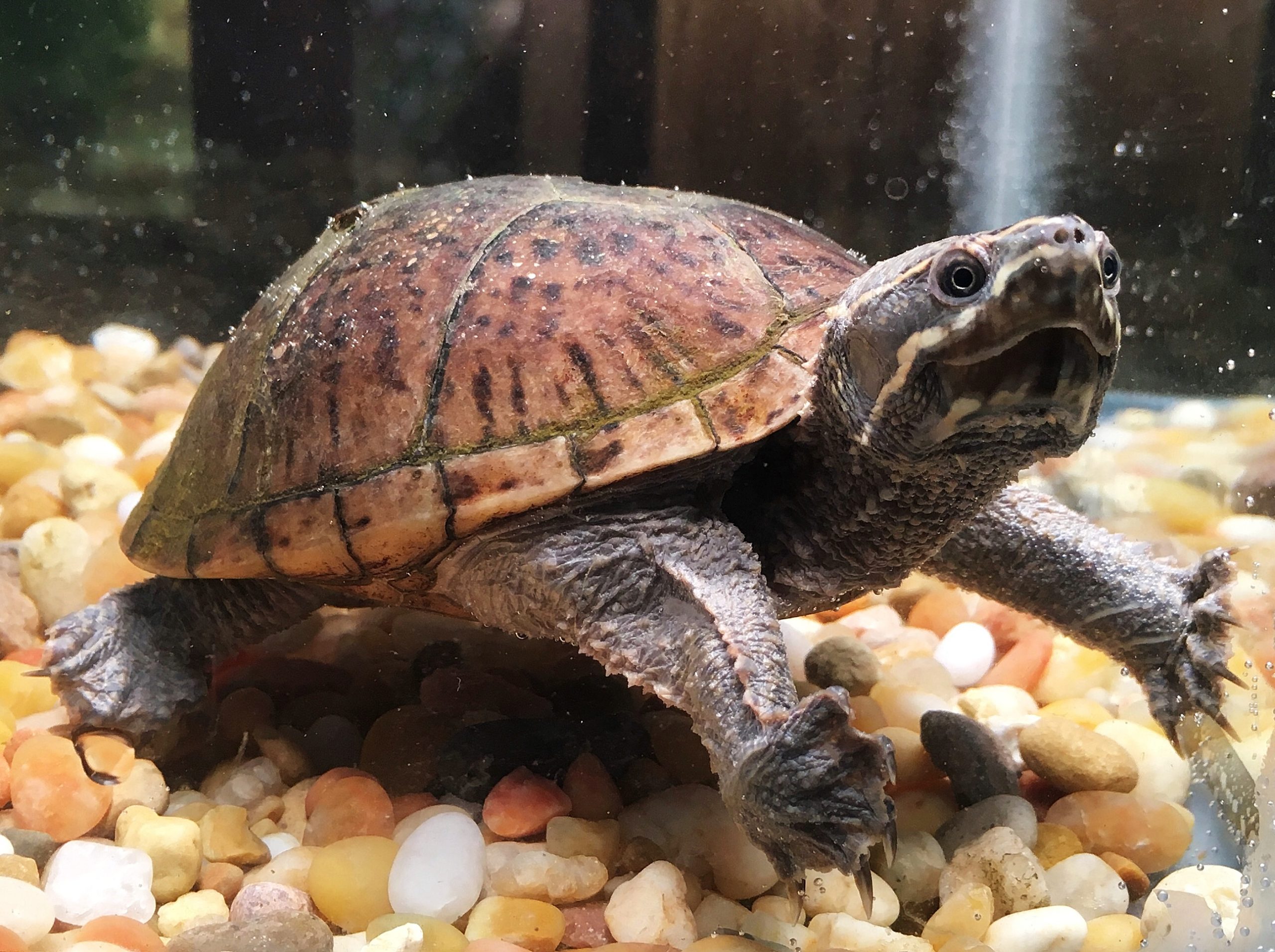
Never underestimate the ability of the small and meek to overcome adversity–especially when it comes to turtles. This little common musk turtle was brought in last summer with a crush to the center of her carapace. Musks, although common in Connecticut, are actually rarely seen, spending most of their lives well hidden in the streams and ponds they inhabit and not travelling far to nest. When they do get the urge to bask, they climb right up the nearest emergent shrub or tree. This makes them fair game for predators like eagles, who snatch them from the branches and drop them on rocks to crack them open, as gulls do with clams.

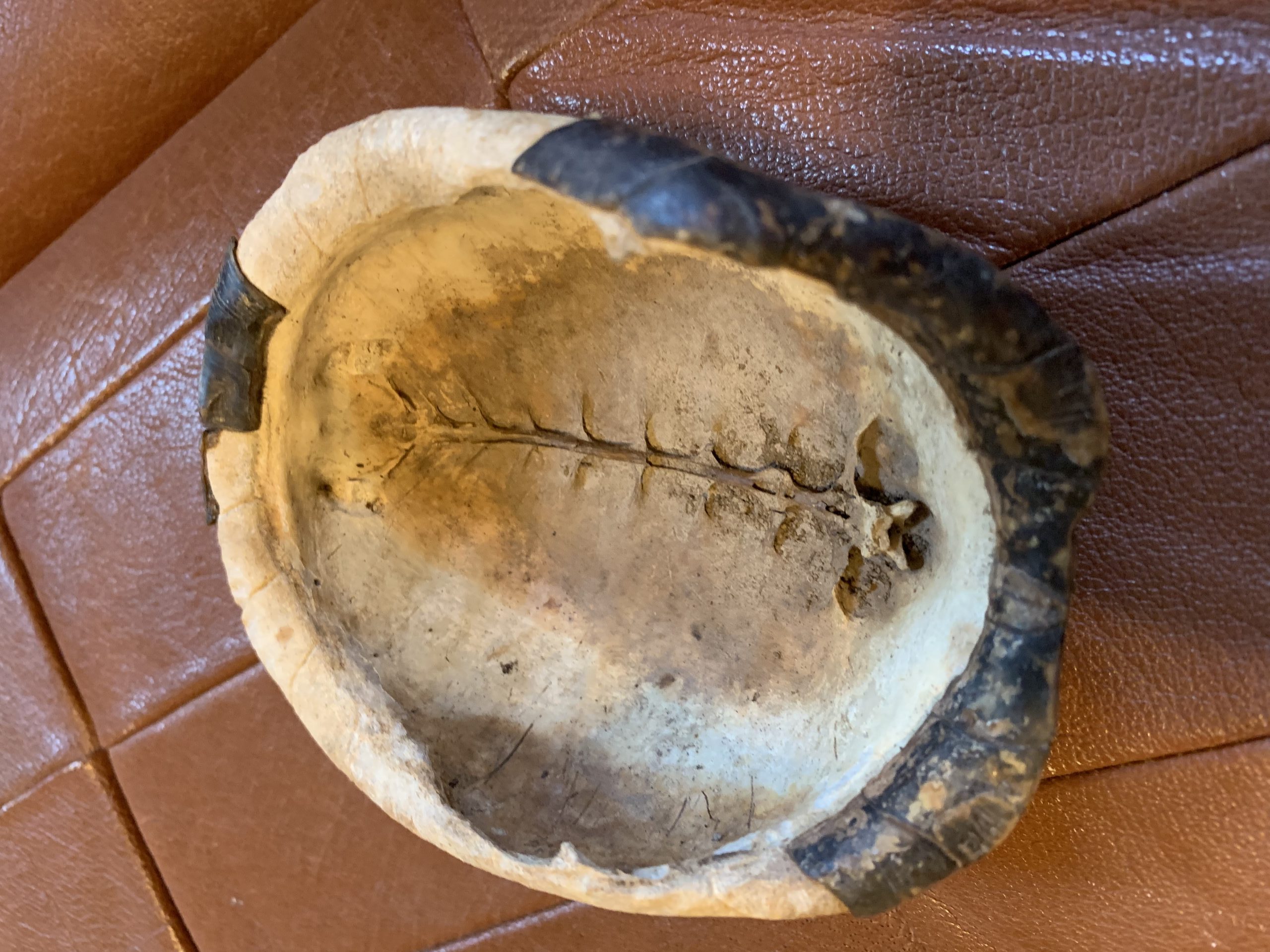
Such was apparently the fate of this hapless girl, who must have landed upside down on the rock. Since the fracture was directly over the spine, there was no manipulating the shell fragments into proper position without risking adding to any spinal damage that may have already occurred. All that could be done was to clean, treat and cover the wound and let the miraculous reptile healing process take place. Sure enough, within a few months her carapace was well on its way to regranulation, but her hind legs told another story. While she was able to move them in response to stimulus, she didn’t use them to walk or swim. All locomotion was done by dragging herself around with her front legs–a clear sign of neurological damage caused by spinal injury. This did not bode well for a return to life in the wild, and it certainly seemed like she was destined to become an educational turtle. I set her up in a shallow water habitat for the winter so she could easily reach her floating food without having to swim to the surface, and began to make plans for her placement.

Sunday, while cleaning tanks, I was amazed to notice her seemingly trying to walk on the smooth bottom of her aquarium. It looked as though she was using all her legs, but she couldn’t get any traction on the smooth bottom, so her movements were pretty erratic and I couldn’t be sure that that was normal coordination I was seeing. I quickly added some gravel substrate and quite a bit more water, and…VOILA! Not only did she begin scrambling all around, but also swimming to the surface and climbing her platform. Musks are really comical when they swim–with their long necks stretched out and their tiny webbed feet paddling like there’s no tomorrow, trying to get liftoff of their stout, hamburger-like bodies, there’s usually a lot of bouncing and tipping involved. Compared to other turtles, it hardly looks normal. But to see this little female, whom I’d written off as unreleasable, doing her musk turtle dance after the better part of a year as a handicapped patient, there was no mistaking the perfect normalcy of it. And really, it’s a little victory dance, because she’s going home after all.

Earth Day Challenge

How much do you know about Connecticut Turtles?

What do you get when you combine three million years of reptiles with half a century of Earth Day? Turtle trivia!!
In celebration of this 50th anniversary of Earth Day, we challenge you to up your game with a quiz that will challenge even the most confident turtle nerd. Created by The Turtle’s Back board member and die-hard turtle enthusiast Anne Schneider McNulty for Connecticut Audubon, It’s a great way to test your state turtle IQ!
https://qz.app.do/ct-turtle-trivia

Approach to Inspiring Change

Lorem ipsum dolor sit amet, consetetur sadipscing elitr, sed diam nonumy eirmod tempor invidunt ut labore et dolore magna aliquyam erat, sed diam voluptua. At vero eos et accusam et justo duo dolores et ea rebum. Stet clita kasd gubergren, no sea takimata sanctus est Lorem ipsum dolor sit amet. Lorem ipsum dolor sit amet, consetetur sadipscing elitr, sed diam nonumy eirmod tempor invidunt ut labore et dolore magna aliquyam erat, sed diam voluptua. At vero eos et accusam et justo duo dolores et ea rebum. Stet clita kasd gubergren, no sea takimata sanctus est Lorem ipsum dolor sit amet.

Lorem ipsum dolor sit amet, consetetur sadipscing elitr, sed diam nonumy eirmod tempor invidunt ut labore et dolore magna aliquyam erat, sed diam voluptua. At vero eos et accusam et justo duo dolores et ea rebum. Stet clita kasd gubergren, no sea takimata sanctus est Lorem ipsum dolor sit amet. Lorem ipsum dolor sit amet, consetetur sadipscing elitr, sed diam nonumy eirmod tempor invidunt ut labore et dolore magna aliquyam erat, sed diam voluptua. At vero eos et accusam et justo duo dolores et ea rebum. Stet clita kasd gubergren, no sea takimata sanctus est Lorem ipsum dolor sit amet.

The Power to Create Change

Lorem ipsum dolor sit amet, consetetur sadipscing elitr, sed diam nonumy eirmod tempor invidunt ut labore et dolore magna aliquyam erat, sed diam voluptua. At vero eos et accusam et justo duo dolores et ea rebum. Stet clita kasd gubergren, no sea takimata sanctus est Lorem ipsum dolor sit amet. Lorem ipsum dolor sit amet, consetetur sadipscing elitr, sed diam nonumy eirmod tempor invidunt ut labore et dolore magna aliquyam erat, sed diam voluptua. At vero eos et accusam et justo duo dolores et ea rebum. Stet clita kasd gubergren, no sea takimata sanctus est Lorem ipsum dolor sit amet.

Lorem ipsum dolor sit amet, consetetur sadipscing elitr, sed diam nonumy eirmod tempor invidunt ut labore et dolore magna aliquyam erat, sed diam voluptua. At vero eos et accusam et justo duo dolores et ea rebum. Stet clita kasd gubergren, no sea takimata sanctus est Lorem ipsum dolor sit amet. Lorem ipsum dolor sit amet, consetetur sadipscing elitr, sed diam nonumy eirmod tempor invidunt ut labore et dolore magna aliquyam erat, sed diam voluptua. At vero eos et accusam et justo duo dolores et ea rebum. Stet clita kasd gubergren, no sea takimata sanctus est Lorem ipsum dolor sit amet.

Building Tomorrow’s Reality

Lorem ipsum dolor sit amet, consetetur sadipscing elitr, sed diam nonumy eirmod tempor invidunt ut labore et dolore magna aliquyam erat, sed diam voluptua. At vero eos et accusam et justo duo dolores et ea rebum. Stet clita kasd gubergren, no sea takimata sanctus est Lorem ipsum dolor sit amet. Lorem ipsum dolor sit amet, consetetur sadipscing elitr, sed diam nonumy eirmod tempor invidunt ut labore et dolore magna aliquyam erat, sed diam voluptua. At vero eos et accusam et justo duo dolores et ea rebum. Stet clita kasd gubergren, no sea takimata sanctus est Lorem ipsum dolor sit amet.

Lorem ipsum dolor sit amet, consetetur sadipscing elitr, sed diam nonumy eirmod tempor invidunt ut labore et dolore magna aliquyam erat, sed diam voluptua. At vero eos et accusam et justo duo dolores et ea rebum. Stet clita kasd gubergren, no sea takimata sanctus est Lorem ipsum dolor sit amet. Lorem ipsum dolor sit amet, consetetur sadipscing elitr, sed diam nonumy eirmod tempor invidunt ut labore et dolore magna aliquyam erat, sed diam voluptua. At vero eos et accusam et justo duo dolores et ea rebum. Stet clita kasd gubergren, no sea takimata sanctus est Lorem ipsum dolor sit amet.

The Greatest Solution

Lorem ipsum dolor sit amet, consetetur sadipscing elitr, sed diam nonumy eirmod tempor invidunt ut labore et dolore magna aliquyam erat, sed diam voluptua. At vero eos et accusam et justo duo dolores et ea rebum. Stet clita kasd gubergren, no sea takimata sanctus est Lorem ipsum dolor sit amet. Lorem ipsum dolor sit amet, consetetur sadipscing elitr, sed diam nonumy eirmod tempor invidunt ut labore et dolore magna aliquyam erat, sed diam voluptua. At vero eos et accusam et justo duo dolores et ea rebum. Stet clita kasd gubergren, no sea takimata sanctus est Lorem ipsum dolor sit amet.

Lorem ipsum dolor sit amet, consetetur sadipscing elitr, sed diam nonumy eirmod tempor invidunt ut labore et dolore magna aliquyam erat, sed diam voluptua. At vero eos et accusam et justo duo dolores et ea rebum. Stet clita kasd gubergren, no sea takimata sanctus est Lorem ipsum dolor sit amet. Lorem ipsum dolor sit amet, consetetur sadipscing elitr, sed diam nonumy eirmod tempor invidunt ut labore et dolore magna aliquyam erat, sed diam voluptua. At vero eos et accusam et justo duo dolores et ea rebum. Stet clita kasd gubergren, no sea takimata sanctus est Lorem ipsum dolor sit amet.